Choosing a new horse barn isn’t always as straightforward as it seems. What looks affordable today can turn into a long list of repairs, repainting projects, and unexpected expenses a few years from now. If you’ve been comparing different options, you’ve probably asked yourself whether Steel Horse Barns are really worth it.
It’s a fair question. A horse barn has to do more than provide shelter. It needs to protect your horses, support your daily routine, and hold up through changing weather year after year. Whether you’re replacing an older structure or building for the first time, you want something that makes sense for the long run.
This guide covers the main advantages, drawbacks, and costs of Steel Horse Barns so you can decide whether they’re the right fit for your property.
Why More Horse Owners Are Switching to Steel Horse Barns
For decades, wood was the go-to material for horse barns. While many owners still prefer its traditional look, steel has become an increasingly popular option for those who want a practical, low-maintenance solution.
If you’ve ever dealt with warped boards, termite damage, or constant repainting, you already know how quickly maintenance can become frustrating. That’s one of the biggest reasons people are making the switch to Steel Horse Barns.
Steel doesn’t rot, crack, or attract insects the way wood can. It also handles harsh weather much better than many traditional materials. Heavy rain, strong winds, and snow can take a toll on a building over time, but a properly engineered steel structure is designed to withstand those conditions.
Flexibility is another major advantage. Modern steel buildings create large open interiors without support posts getting in the way. That extra space gives you more freedom when designing stalls, tack rooms, wash bays, feed storage areas, and equipment storage.
Many horse owners also appreciate the ability to expand later. If your operation grows, modifying a steel building is often simpler and more affordable than making major changes to a traditional wood barn.
The Pros and Cons of Steel Horse Barns
Like any building option, Steel Horse Barns have advantages and disadvantages. The key is understanding how those factors align with your needs and budget.
Pros
Lower Maintenance
One of the biggest selling points is the reduced maintenance.
Wood barns often require staining, painting, sealing, and repairs throughout their lifespan. Steel buildings typically arrive with factory-finished panels that maintain their appearance for years with very little attention.
For many owners, that means fewer weekends spent working on the barn and more time spent riding, training, or caring for horses.
Better Protection Against Pests
Termites and rodents can cause significant damage to wood structures. Repairing that damage can become expensive very quickly.
Steel eliminates many of those concerns and helps keep the structure in better condition over time.
Strong Weather Resistance
Weather is unpredictable, but your barn shouldn’t be.
Steel structures are engineered according to local wind and snow requirements. That added strength helps protect horses, feed, tack, and equipment when severe weather arrives.
Easier Cleaning
A clean barn is healthier for both horses and owners.
Steel surfaces can be washed quickly and dry faster than wood because they don’t absorb moisture. That makes routine cleaning much easier.
Added Fire Protection
While no structure is completely immune to fire, steel is non-combustible. Many owners see this as an important benefit when housing valuable animals and storing hay or equipment.
Cons
Higher Upfront Cost in Some Cases
Depending on the design and customization options, a steel barn may cost more upfront than a basic wood structure.
However, many owners find that lower maintenance expenses help offset that difference over time.
Insulation Requires Planning
Steel transfers heat and cold more easily than wood.
That doesn’t mean steel barns are uncomfortable. It simply means insulation and ventilation should be part of the design from the beginning.
Large Projects Often Need Professional Installation
Some smaller building kits are suitable for experienced DIY builders.
Larger horse barns usually benefit from professional installation to ensure the structure performs as intended and meets local building requirements.
How Much Do Steel Horse Barns Cost?
This is usually the first question horse owners ask, and the answer depends on several factors.
The size of the building plays a major role. A simple barn with a few stalls will cost much less than a larger facility that includes storage areas, wash bays, tack rooms, and space for equipment.
Other factors that affect pricing include:
- Building dimensions
- Number of horse stalls
- Roof style
- Foundation requirements
- Insulation packages
- Electrical installation
- Plumbing systems
- Site preparation
- Local labor costs
- Regional wind and snow load requirements
Location also matters. Permit fees, local regulations, and site conditions vary from one area to another and can influence the final budget.
When comparing options, it helps to look beyond the purchase price. Many owners choose Steel Horse Barns because they expect to spend less on maintenance, repairs, and upgrades over the years.
For additional information about available building options, visit our Barns page and explore different layouts and customization possibilities.
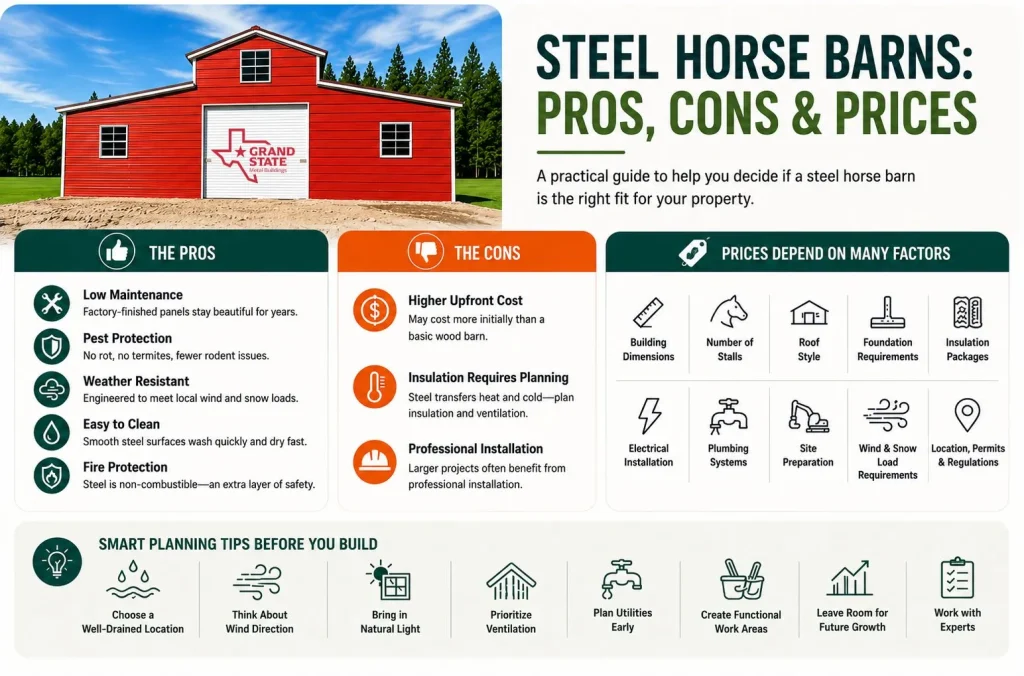
Smart Planning Tips Before You Build
Choosing the right material is important, but good planning can make just as much difference in how your barn performs over time.
Choose a Well-Drained Location
A beautiful site isn’t always the best site.
Poor drainage can create muddy conditions and foundation issues. Choosing a well-drained location helps prevent future problems and makes daily barn activities much easier.
Think About Wind Direction
Ventilation starts with placement.
Many builders recommend positioning the barn to take advantage of natural airflow while avoiding direct wind tunnels through the interior.
Bring in Natural Light
A bright barn feels more comfortable for both horses and handlers.
Windows, skylights, and open layouts can improve visibility while reducing the need for artificial lighting during the day.
Prioritize Ventilation
Good airflow plays an important role in horse health.
Features such as ridge vents, exhaust fans, vented windows, and Dutch doors can help maintain fresh air throughout the barn.
Plan Utilities Early
Water lines, lighting, outlets, and drainage systems are easier and often less expensive to install during construction than after the building is complete.
Create Functional Work Areas
Think about how you use your barn every day.
Dedicated spaces for grooming, washing, storing tack, and organizing feed can make daily tasks much more efficient.
Leave Room for Future Growth
Even if your current setup works perfectly, your needs may change.
Planning for additional stalls or storage now can save both money and effort later.
Explore Your Steel Horse Barn Options
Every horse property is different. You may need a compact barn for a few horses, a larger setup for breeding or boarding, or extra storage for tractors, trailers, and equipment. That’s why it’s worth taking the time to think about how your barn will serve you not only today, but years from now.
If you’re considering Steel Horse Barns, our team is here to help. Whether you’re still comparing options or you’re ready to start planning, we can help you find a solution that fits your property, your horses, and your budget.
Contact us today, explore our available building options, or browse more articles on our blog for additional ideas and inspiration.