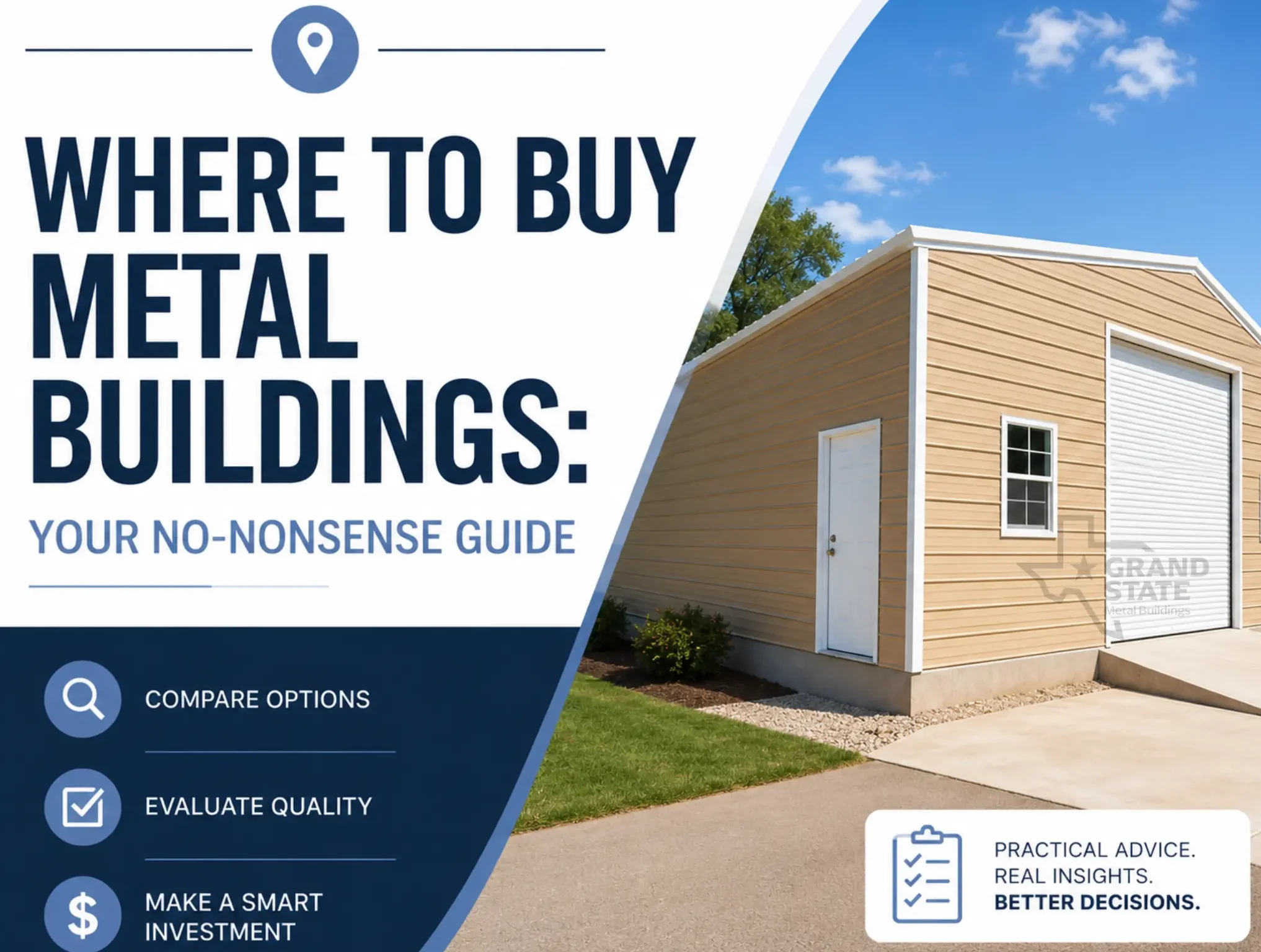

You have been searching online, and the results are overwhelming. Big-box retailers, national manufacturers, local dealers, random websites with no clear location. You just want to know where to buy metal buildings without getting burned by a bad price, a shady contract, or a company that disappears after the deposit. That feeling is completely normal. The market is noisy. This guide cuts through it and gives you a clear picture of your real options, so you can make a confident decision.
The Problem With Searching for Metal Buildings Online
When you search for metal buildings, you run into two kinds of sellers. The first type is massive national platforms that show competitive prices but often lack local knowledge, real support, or accountability once the sale is done. The second type is small, hard-to-verify dealers with flashy websites and vague delivery timelines.
Neither of those is necessarily wrong, but neither is automatically right either. The key is understanding what each option actually offers, and what it leaves out.
The steel building industry in the United States generates over $10 billion annually and continues to grow, which means more sellers entering the market every year. More options sound good, but more options without the right filters just creates more confusion (Daniels, 2020).
The smartest move is to know your channels before you start comparing prices. Let’s go through them.
The Main Channels Where People Buy Metal Buildings
There are four primary ways people buy metal buildings today. Each one has real advantages and real trade-offs worth knowing.
Direct from a Manufacturer
Buying directly from a manufacturer typically gives you the best price per square foot. There is no middleman markup. You work with the team that actually builds the structure, which means more customization options and better technical support. The downside is that some manufacturers do not handle installation, so you may need to coordinate that separately.
Through a Local Dealer
Local dealers represent one or more manufacturers and manage the entire process from sale to installation. They know local codes, soil conditions, wind and snow load requirements, and permit processes. That local knowledge matters more than most people realize. A building that does not meet local engineering standards will either get rejected or cause problems down the road.
Through a National Retailer or Big-Box Store
Stores like Tractor Supply and some home improvement chains carry smaller pre-engineered metal building kits. These work well for basic storage sheds and small garages. They are limited in size and customization, but the process is simple and the pricing is transparent. For larger or more complex structures, these options fall short.
Through an Online Marketplace or Broker
There are several online platforms and brokers that connect buyers with manufacturers. These can be convenient for price comparison, but the experience varies widely. Some brokers have strong manufacturer relationships and provide real support. Others are order-takers with no accountability after the sale. Always verify who is actually building the structure before you put down any money.
From a Local Fabricator
In many regions, local steel fabricators build custom structures on demand. This option offers maximum flexibility and often strong personal service. Costs can be higher than pre-engineered systems, and lead times vary. If you need something highly custom or non-standard, a local fabricator is worth getting a quote from.
What to Look For Before You Commit
Once you have identified a few potential sellers, here is how to separate the good options from the ones that will frustrate you.
Verify Their Installation Coverage
Some companies sell the building but not the installation. Others include it but subcontract to crews they have never worked with. Ask directly: who does your installation, are they employees or subcontractors, and what is their experience in your area? Installation quality determines how the building performs for years to come.
Check Certifications and Engineering Standards
A properly engineered metal building should meet local building codes and carry certification for wind and snow loads in your region. Ask for documentation. If a seller cannot provide engineering specs or certifications, that is a problem regardless of how competitive their price looks.
Ask About Lead Times and Delivery
Metal building lead times have stretched significantly since 2021 due to supply chain changes. A realistic manufacturer will give you a firm timeline and communicate delays proactively. Be cautious of anyone who promises unusually fast delivery without a clear explanation.
Read the Contract Line by Line
Contracts for metal buildings should specify materials, gauge of steel, included components like doors, windows, and trim, payment schedule, and what happens if there are delays or damage during delivery. According to Postframe Building Insights, many buyer disputes in the prefabricated building industry stem from ambiguous contract language around change orders and delivery terms (Frame Building News, 2019).
Look for Post-Sale Support
A company that answers the phone before the sale should also answer it after. Ask what kind of warranty they offer on both materials and workmanship. A good seller stands behind what they build and helps you navigate any issues that come up after installation.
Red Flags That Can Cost You
Some warning signs are easy to spot once you know what to look for. Keep these in mind as you evaluate your options.
- No physical address or local presence. If a company cannot tell you where they are based, that matters.
- Unusually low prices with no explanation. Metal has a market price. A quote that is 40% below competitors almost always means lower-gauge steel, missing components, or hidden fees.
- Pressure to sign quickly. A legitimate seller will give you time to review the contract and ask questions.
- No references or reviews. Ask for customer references in your state or region. A reputable company will have them.
- Vague installation terms. If the contract does not clearly define who installs, when, and under what conditions, do not sign until it does.
If you are in Texas or a nearby state, Grand State Metal Buildings is a locally rooted option with over 20 years of combined industry experience, transparent pricing, and real installation crews. We are based in Waco and serve customers across the region.
Also, if you are still deciding what kind of structure fits your needs best, our guide on metal building types can help you narrow things down before you start comparing sellers. Check out our Also, if you are still deciding what kind of structure fits your needs best, our guide on metal building options can help you narrow things down before comparing sellers. Visit our resources page for more guidance.
References
Daniels, G. (2020). Steel structures: A practical guide to design and construction. McGraw-Hill Education.
Frame Building News. (2019). Buyer disputes in prefabricated structures: Common contract issues and how to avoid them. National Frame Building Association.
Metal Building Manufacturers Association. (2012). Low-rise building systems manual (10th ed.). MBMA.
U.S. Census Bureau. (2023). Construction spending: Manufacturing and commercial structures. https://www.census.gov/construction/c30/c30index.html